Burlington's PV Labs plans to design and develop a next-generation night-vision sensor for the Apache attack helicopter with backing from Lockheed Martin, the company announced Wednesday, Oct. 28. It said it has been approved for funding under Canada's Industrial and Technological Benefits Policy, the step that opens the door to Lockheed's investment. The announcement didn't give a dollar amount or a detailed timetable.
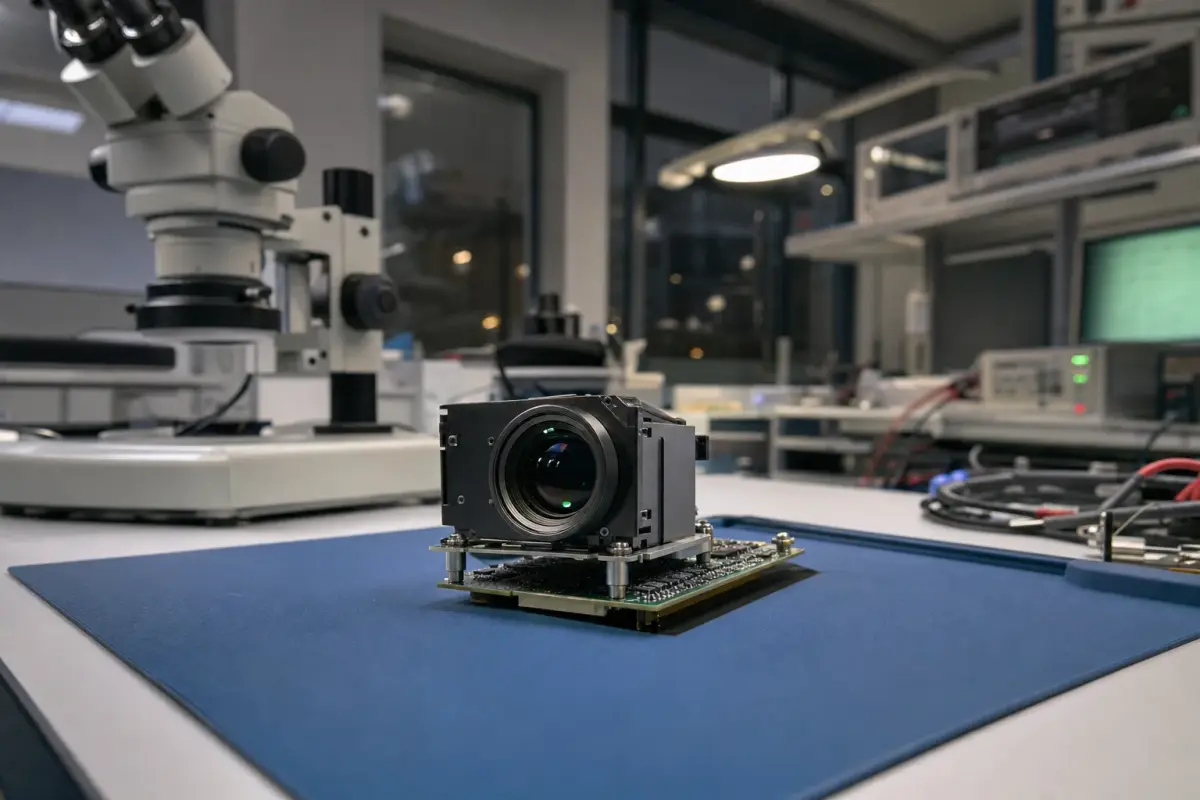
The approved plan sets out several years of work on an advanced staring-array sensor, a type of sensor that helps crews see. It is meant to help them fly at night, in bad weather and when dust, smoke or haze cut visibility.
Why Lockheed? The Industrial and Technological Benefits Policy is the federal rule that requires defence contractors selling to Canada to do business and invest here in return. PV Labs' approved investment framework is tied to Canada's purchase of 26 Lockheed Martin High Mobility Artillery Rocket Systems, or HIMARS, truck-mounted rocket launchers bought through a government-to-government agreement with the United States finalized in January 2026. The whole project is estimated to cost $2.6 billion, with deliveries expected to begin in 2029. The sensor isn't for the launchers: the link is what Lockheed must give back to Canadian industry.
Under those obligations, Lockheed plans to bring Canadian companies into its global supply chains, invest in Canadian research and development and help small and medium-sized businesses grow. PV Labs fits that last group: it describes itself as one, working with international aerospace and defence manufacturers.
The company builds optronics, systems that combine cameras and electronics, along with intelligence, surveillance and reconnaissance gear and other mission-critical sensors. It calls itself a dual-use firm, meaning its technology serves both military and civilian customers.
Founder and president Mark Chamberlain said the approval reinforces PV Labs' position as Lockheed Martin's trusted research and delivery partner in Canada for advanced optronics systems. Ontario Economic Development Minister Vic Fedeli said the partnership will put next-generation night-vision sensors on the Apache, "showcasing Ontario-made innovation at a new scale."
The news comes three months after Burlington MP Karina Gould announced $7.5 million from FedDev Ontario, the federal agency that funds business growth in southern Ontario, for three Burlington businesses on July 27. PV Labs' share was $5 million, through the Regional Defence Investment Initiative, toward a $14-million project to expand its manufacturing in Canada. That money is to speed production of its Fifth-generation Advanced Stabilization Technology, or FAST, a stabilized gimbal that keeps cameras steady on moving aircraft.