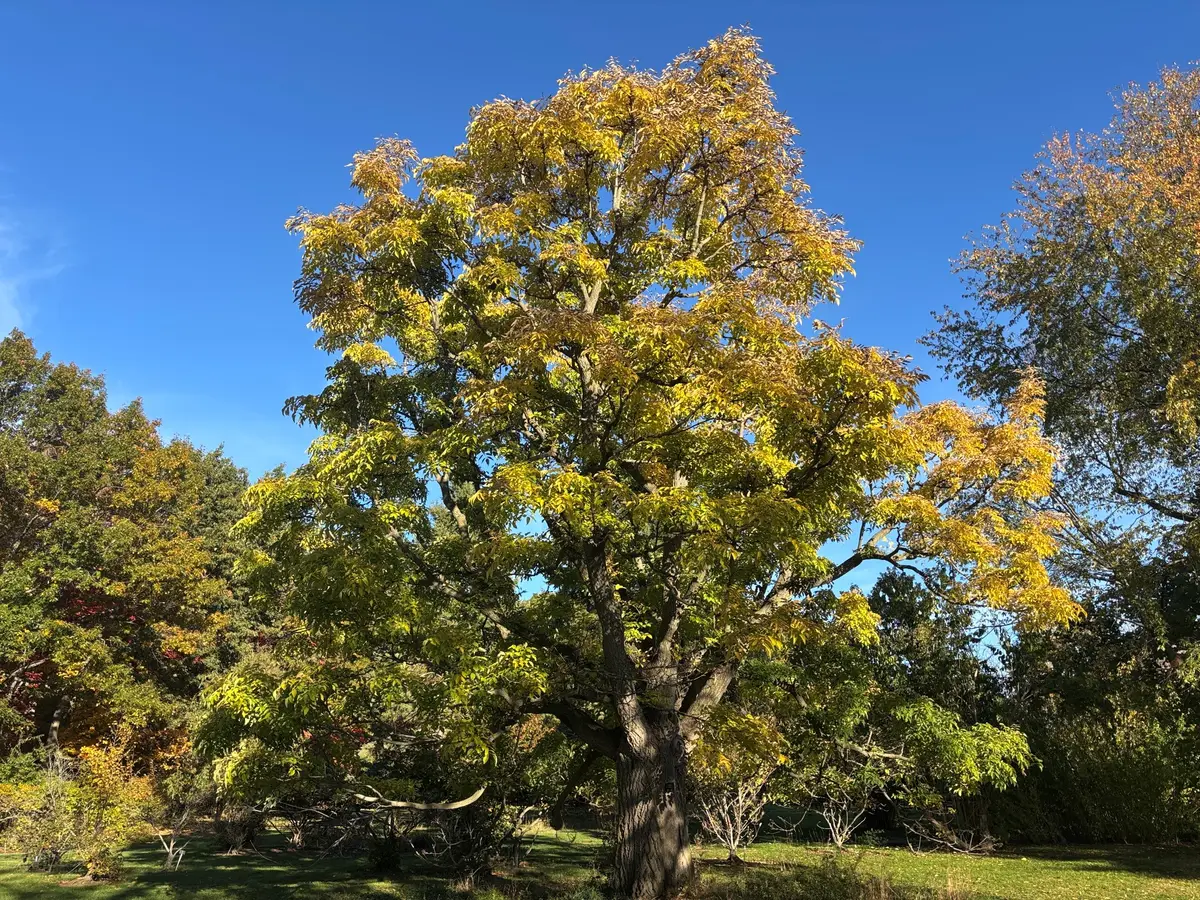
A tree that Royal Botanical Gardens once grew for display has spread from its collections into nearby natural areas, and late fall is one of the best times for trail walkers to pick it out: its leaves turn a brilliant yellow. RBG says it now manages the Amur cork tree as an invasive species, a plant from elsewhere that spreads on its own and crowds out native ones.
Native to northern China, the species was introduced to RBG's Arboretum and Hendrie Park in the 1950s. Mature trees bear clusters of plump black fruit, and those seeds can start new generations nearby. In recent years, hundreds of young ones have turned up in the surrounding forests.
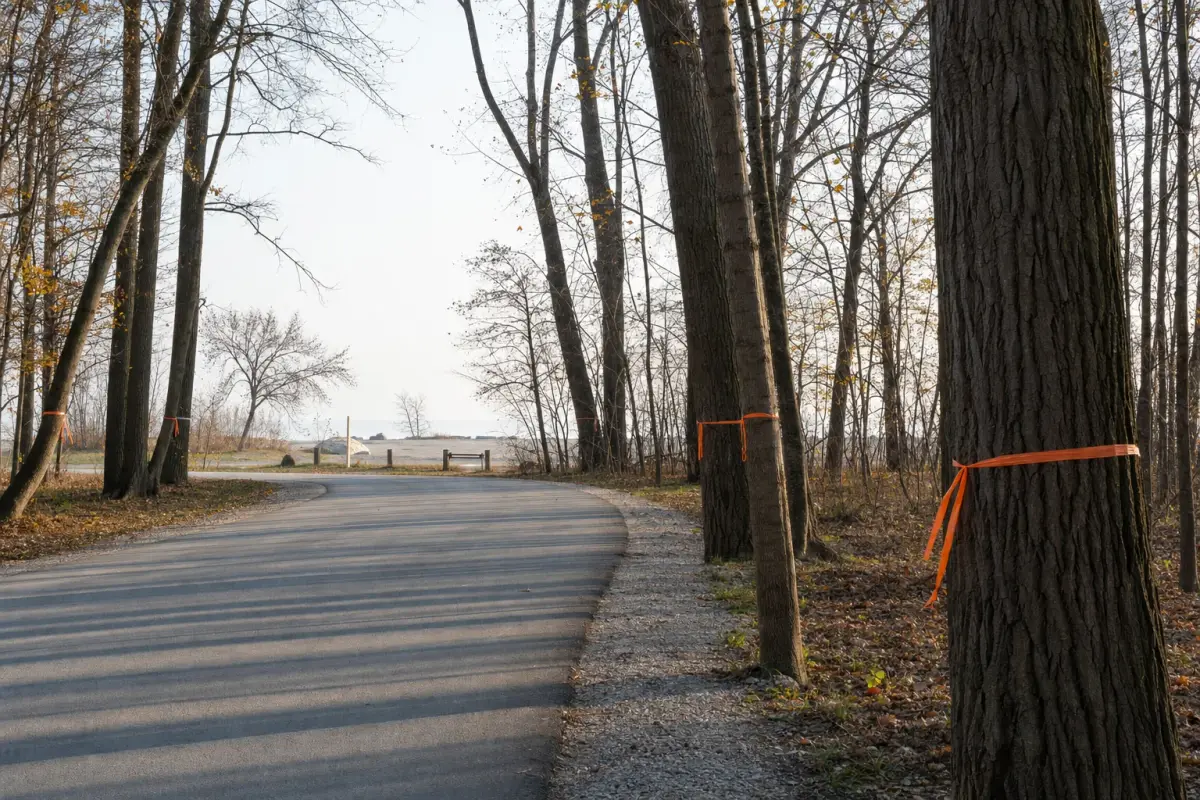
In 2025, RBG staff removed 639 trees from the forest, some of them large, with help from a grant from the Ontario Invasive Species Centre. Several mature specimens also came out of the Arboretum and a former nursery area that year. The work went on in 2026, when several dozen small trees and hundreds of seedlings were removed.
A few big ones still stand: two planted in 1955 in the Arboretum's Tree Avenue #1, plus large specimens at the Rock Garden and the RBG Centre. Cutting only the seed-bearing females and keeping the males isn't a reliable long-term fix, the gardens say. Seeds need pollination between male and female flowers, but this species can change its reproductive form.
RBG says the tree's growing presence raises questions about how warming local conditions may favour plants that used to stay inside cultivated gardens.
With its compound leaves and furrowed bark, the Amur cork tree looks a lot like native black walnut and ash. Yellow fall colour helps, but walnut and hickory turn yellow too, and RBG reported walnuts already yellow at the start of October. White ash, by contrast, turns a distinctive purple.
RBG said Nov. 1 that its nature sanctuaries were reaching peak fall colour, with above-average temperatures expected to keep leaves vibrant through at least the first week of November.
See the post on Instagram